

LAYING THE FOUNDATIONS
Main Street’s innovation journey began during the First Industrial Revolution, where small scale production and local trade shaped early community life. The Second Industrial Revolution expanded these streets through railroads, electricity, and growing storefronts, connecting towns and scaling commerce. The Third Industrial Revolution introduced digital systems, transforming how businesses operate and how people communicate. Together, these eras built the physical, economic, and digital foundations of Main Street. Today, these foundations support a new era where emerging technologies enhance daily life, strengthen connection to place, and bring innovation back to the street level where communities live, work, and engage.
LANDING PAGE CONTENT
- What Are Main Street Smart Cities?
- Aligning Main Street with Its Innovation Story
- Regional Main Street Smart Cities Campaigns
- New Tools to Rethink Main Street
- Using Technology for Good

MAIN STREET SMART CITIES
Main Street Smart Cities begins with the story of Main Street itself. Local businesses, gathering places, and daily life formed the center of community. From early shops and walkable streets, it grew into expanding town centers. Main Street has always reflected how people live, work, and connect.
New industrial revolutions shaped that journey. Early innovations helped a young nation gain independence and establish local economies. Railroads, electricity, and expanding infrastructure built Main Street cities and connected them across regions. Later, automobiles and digital systems supported the shift into suburban life, changing how people moved, worked, and experienced their communities.
These layers of progress created the foundation for what comes next. The physical streets, economic systems, and digital networks now work together. They set the stage for a new chapter in how communities evolve.
Main Street Smart Cities focuses on aligning who we are within a world experiencing rapid change and disruption. It centers on using technology in ways that strengthen identity, connection, and understanding as communities evolve. Rather than chasing scale or spectacle, it brings clarity to how people experience their everyday lives. In a time of uncertainty, it offers a sense of direction and belief that progress can still support people, places, and the meaning found on Main Street.

Human Experience Meets Technology
Human Experience Meets Technology
Human Experience Meets Technology
Main Street Smart Cities brings human experience and technology together. It uses tools like VR, robotics, and AI to strengthen connection, understanding, and everyday life across communities.
Preserving Our Main Street Values
Human Experience Meets Technology
Human Experience Meets Technology
Main Street Smart Cities preserves core community values across generations. It uses technology to strengthen connection, support local identity, and carry forward what matters on Main Street.
Bringing Our Values Forward
Human Experience Meets Technology
Rededicating to America's Vision
Main Street Smart Cities brings community values forward through change. It uses technology to carry forward identity, connection, and meaning as communities grow and evolve together.
Rededicating to America's Vision
Human Experience Meets Technology
Rededicating to America's Vision
Main Street Smart Cities renews commitment to America’s founding vision. It uses technology to strengthen communities, support local purpose, and carry forward the ideals shaping Main Street.
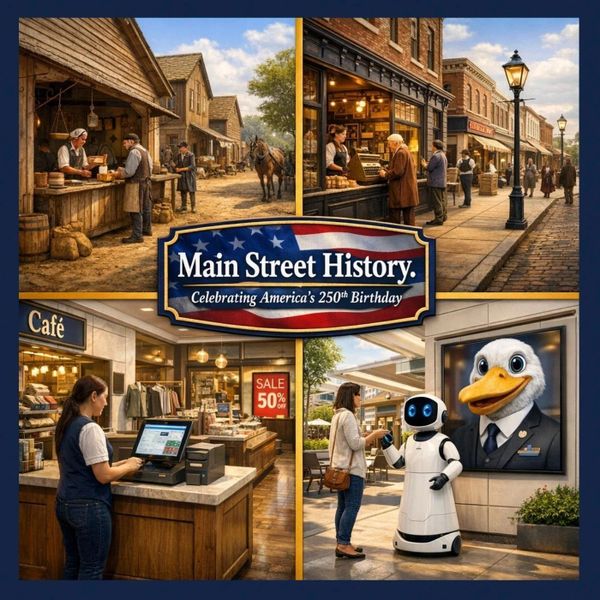
MAIN STREET HISTORY
Main Street History showcases the innovation journey of Main Street across the first three industrial revolutions by highlighting how each era shaped everyday life. During the First Industrial Revolution, small scale production and local trade defined early communities and walkable streets. The Second Industrial Revolution introduced railroads, electricity, and expanded storefronts, allowing Main Street to grow and connect with surrounding regions.
The Third Industrial Revolution brought digital systems that changed how businesses operate and how people communicate and access information. Together, these periods show how innovation transformed Main Street while keeping it centered on people, commerce, and community life, laying a foundation for how today’s advancements continue that journey forward.
The First Industrial Revolution
The Second Industrial Revolution
The Second Industrial Revolution
Main Street overcame early challenges through innovation and new tools. It used emerging technologies to improve production, strengthen local economies, and support growing communities.
The Second Industrial Revolution
The Second Industrial Revolution
The Second Industrial Revolution
Main Street overcame growing challenges through industrial innovation and infrastructure. It used railroads, electricity, and new systems to expand commerce, improve efficiency, and connect communities across regions.
The Third Industrial Revolution
The Second Industrial Revolution
The Third Industrial Revolution
Main Street overcame modern challenges through digital innovation. It used computers, internet systems, and automation to improve operations, expand reach, and strengthen community connections.
Local Fallen Heroes Campaigns
The Second Industrial Revolution
The Third Industrial Revolution
Main Street Smart Cities creates Fallen Hero Campaigns to honor those who gave their lives. It ensures communities remember their sacrifice and service across generations.
Local Black Innovator Campaigns
Local Black Innovator Campaigns
Local Black Innovator Campaigns
Main Street Smart Cities creates Black Innovators campaigns to highlight local pioneers who built their cities. Their contributions remain visible respected and part of community history.
Women Trailblazer Campaigns
Local Black Innovator Campaigns
Local Black Innovator Campaigns
Women Trailblazers campaigns feature influential leaders who helped shape local cities. Their legacy remains recognized, respected, and carried forward.
Main Street Innovators Podcast
Local Black Innovator Campaigns
Main Street Innovators Podcast
The Main Street Innovators podcast shares conversations with leaders and builders exploring new ideas and bold thinking that help redefine what is possible once more.
The Future of Main Street
Local Black Innovator Campaigns
Main Street Innovators Podcast
The Future of Main Street is an eight-part documentary telling Main Street’s innovation story. It explores how each era shaped communities and continues to influence what comes next.
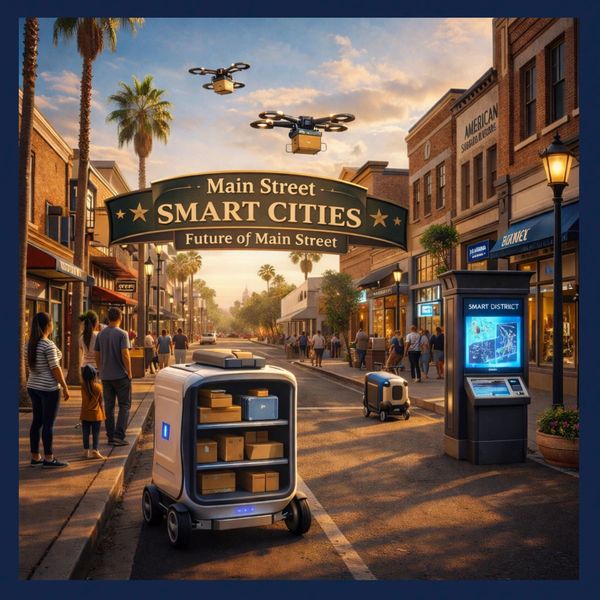
MAIN STREET REGIONS
Main Street Smart Cities creates regions across North America to organize how communities explore their past and prepare for what comes next, bringing together local cities, leaders, and organizations under a shared framework that connects history with future direction. Each region moves forward with a clear structure that reflects its identity while aligning communities around a common vision.
Within each region, local campaigns are launched to connect the past with the Future of Main Street, highlighting the stories, milestones, and people that shaped each community while introducing new ways to experience and understand them. This approach keeps history visible and relevant as communities continue to grow and evolve, starting in California where the first regions establish the model and set the foundation for expansion across North America.
San Diego Smart Cities
Orange County Smart Cities
Orange County Smart Cities
San Diego Smart Cities launches a new chapter for Main Street by exploring technology, innovation, and local leadership to help communities prepare for the next industrial revolution.
Orange County Smart Cities
Orange County Smart Cities
Orange County Smart Cities
Orange County Smart Cities continues the journey by bringing innovation, emerging technology, and community leadership together to strengthen Main Street and prepare for the next era.
Los Angeles Smart Cities
Orange County Smart Cities
San Francisco Smart Cities
Los Angeles Smart Cities expands the Main Street vision across one of the world’s most influential regions. Local leaders explore ways to help communities move forward.
San Francisco Smart Cities
Orange County Smart Cities
San Francisco Smart Cities
Senior Living 4.0 transforms modern care communities through AI avatars, virtual reality, and robotics, helping seniors stay connected, independent, and valued while inspiring caregivers with purpose and innovation.
THE FUTURE OF DINING
The Future of Dining honors the restaurant innovation story by building on the foundations created across generations, where each era shaped how people gather, serve, and experience food. Main Street Smart Cities brings this history forward by introducing new technology that rethinks the dining experience while staying grounded in human connection and everyday moments inside the restaurant.
By leveraging virtual reality, Breezy AI, and robotics, restaurants can create more engaging guest experiences while supporting employees in their daily roles. These tools help improve consistency, reduce pressure during service, and create new ways for guests to connect with the story behind each restaurant, leading to a stronger dining experience and a more positive environment for employees.
The Future of Main Street Shopping
The Future of Hospitals (Hospital 4.0)
The Future of Main Street Shopping
Retail 4.0 reimagines Main Street shopping through immersive experiences, AI guidance, and robotics. It strengthens connection to products, improves service, and brings new life to local stores.
The Future of Hotels (Hotel 4.0)
The Future of Hospitals (Hospital 4.0)
The Future of Main Street Shopping
The Future of Hotels reimagines hospitality through immersive experiences, AI guidance, and robotics. It strengthens guest connection, improves service consistency, and enhances the overall stay experience.
The Future of Hospitals (Hospital 4.0)
The Future of Hospitals (Hospital 4.0)
The Future of Hospitals (Hospital 4.0)
The Future of Hospitals reimagines the patient experience through VR, AI-guided care, and robotics. It strengthens connections, improves service consistency, and enhances support across the care journey.
The Future of Senior Living
The Future of Hospitals (Hospital 4.0)
The Future of Hospitals (Hospital 4.0)
Senior Living 4.0 reimagines daily life through VR, AI guidance, and robotics. It strengthens connections, improves service consistency, and enhances support across each resident experience.
Los Angeles VR for Good Campaign
Orange County VR for Good Campaign
Orange County VR for Good Campaign
Retail 4.0 reimagines Main Street shopping through immersive experiences, AI guidance, and robotics. It strengthens connection to products, improves service, and brings new life to local stores.
Orange County VR for Good Campaign
Orange County VR for Good Campaign
Orange County VR for Good Campaign
The Future of Hotels reimagines hospitality through immersive experiences, AI guidance, and robotics. It strengthens guest connection, improves service consistency, and enhances the overall stay experience.
San Diego VR For Good Campaign
Orange County VR for Good Campaign
San Francisco VR for Good Campaign
The Future of Hospitals reimagines the patient experience through VR, AI-guided care, and robotics. It strengthens connections, improves service consistency, and enhances support across the care journey.
San Francisco VR for Good Campaign
Orange County VR for Good Campaign
San Francisco VR for Good Campaign
Senior Living 4.0 reimagines daily life through VR, AI guidance, and robotics. It strengthens connections, improves service consistency, and enhances support across each resident experience.